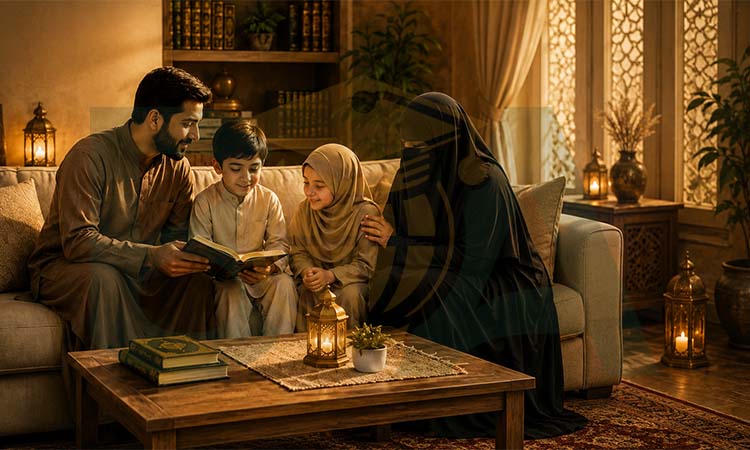
A woman is one of the most beautiful and essential parts of human society. Without her, the picture of life remains incomplete. At a time when many civilizations looked upon women with neglect and injustice, Islam granted them dignity, honor, and clearly defined rights. The Holy Qur’an and the teachings of the Prophet ﷺ show that a woman is not simply an individual; she is a cornerstone in building families, strengthening communities, and shaping future generations.
Among the many relationships a woman holds, the role of a daughter carries a special place. A daughter is a blessing in the home, a source of happiness for her parents, and a means of joy for the entire family. Islam raised the status of daughters by declaring that raising them with love, providing them with proper education, and treating them kindly can become a means of entering Paradise. Sadly, in some societies, daughters came to be seen as a burden, even though Islamic teachings describe them as a mercy and a gift from Allah.
A Time When a Daughter Was Condemned Before She Could Even Live
This is one of the darkest chapters in human history. Even today, reading about it causes the heart to tremble. On the burning sands of Arabia, the tiny footprints of little girls would appear, but they would not remain for long. A father would take the small hand of his innocent daughter and walk toward the desert. The child believed that her father was taking her on a pleasant outing. Sometimes she would kiss his hand, sometimes she would look at his face with innocent eyes, and sometimes she would play with the sand. She had no idea that the same hand she trusted with love was about to take away her life.
A pit would be dug in the sand. The little girl would look at her father in confusion. Then that very father would lower his beloved child into the pit. Her tiny fingers would reach upward, begging for life, while her innocent eyes seemed to ask, “Father, what was my crime?” The only answer was the silent sand, which covered a living flower forever.
How many mothers lost their daughters, how many homes considered the laughter of a girl a disgrace, and how many fathers sacrificed their natural compassion for the false standards of their society. In those days, having a daughter was treated like a crime. A woman was denied dignity, and her existence was considered to have little value.
Then Came the Mercy to All Worlds ﷺ
The same daughter who had once been buried alive became a symbol of mercy. The same woman who had been treated as a burden was honored by Islam with dignity, respect, and noble status. The Messenger of Allah ﷺ declared that daughters are a mercy and gave the glad tidings of Paradise to those who raise them with kindness. For the first time, humanity truly understood that a daughter is not a source of shame but one of Allah’s most beautiful blessings.
History bears witness to a time when ignorance spread so widely across Arabia that people became afraid of the birth of their own daughters. The birth of a girl was regarded as a disgrace. Faces would darken with sorrow, and some hard-hearted fathers buried their innocent daughters alive in the sand, believing that this would preserve their honor. The Holy Qur’an describes this painful reality:
“When one of them is given the news of a daughter, his face darkens, and he is filled with grief.”
(Surah An-Nahl 16:58)
The Qur’an also describes the Day when those innocent children will be questioned:
“And when the girl who was buried alive is asked: For what sin was she killed?”
(Surah At-Takwir 81:8–9)
In this first part of the series, we will discuss the honored position of a daughter, her rights, and her importance in the light of Islamic teachings. The aim is to remove common misunderstandings and to highlight the true status that Islam has given to daughters.
Allah Almighty says in the Holy Qur’an:
“He grants daughters to whom He wills, and He grants sons to whom He wills.”
(Surah Ash-Shura 42:49)
One important point in this verse is that Allah mentions daughters before sons, which is understood by many scholars as an indication of their honor and distinction.
The Glad Tidings of Paradise
The Messenger of Allah ﷺ said:
“Whoever has three daughters and treats them well, Paradise becomes obligatory for him.”
Someone asked, “What if he has two?”
The Prophet ﷺ replied, “Even if he has two.”
It was then asked, “What if he has only one?”
He replied, “Even if he has one.”
(Al-Mu’jam Al-Awsat, Hadith 6199)
The Prophet’s ﷺ Example in His Treatment of Daughters
Whenever Sayyidah Fatimah (رضي الله عنها), the beloved daughter of the Prophet ﷺ, came to him, he would stand up to welcome her, take her hand, kiss it, and seat her in his own place. Likewise, whenever the Messenger of Allah ﷺ visited her home, she would stand to welcome him, take his blessed hand, kiss it, and offer him her seat.
(Sunan Abu Dawud, Hadith 5217)
This beautiful example shows that the Messenger of Mercy ﷺ personally demonstrated love, respect, and honor toward daughters. Through his own actions, he taught the Ummah that a daughter is not a burden or a source of shame, but one of Allah’s greatest blessings.
A Mother’s Sacrifice for Her Daughters
Umm al-Mu’minin Sayyidah A’ishah (رضي الله عنها) narrated:
“A poor woman came to me with her two daughters. I gave her three dates. She gave one date to each of her daughters and kept one for herself. When she was about to eat it, her daughters asked for it, so she split her own date into two and gave it to them. I was deeply moved by what she had done. When I mentioned this to the Messenger of Allah ﷺ, he said: ‘Because of this act, Allah has made Paradise obligatory for her,’ or ‘Allah has saved her from the Fire because of her love and sacrifice for her daughters.'”
(Sahih Muslim, Hadith 2630)
For a more detailed discussion about the status and virtues of daughters in Islam, readers may benefit from the booklet “The Daughter Buried Alive in the Well” by Shaykh al-Tariqah, Ameer-e-Ahl-e-Sunnat, Mawlana Abu Bilal Muhammad Ilyas Attar Qadri Razavi (دامت برکاتهم العالية).
May Allah Almighty grant us the ability to recognize daughters as His mercy and blessing, to provide them with the best Islamic and moral upbringing, to fulfill their rights, and to raise them with the honor and dignity that Islam has given them.
Ameen, for the sake of the Leader of all Messengers, Prophet Muhammad ﷺ.
To Be Continued in Part 2, In shā’ Allāh…