Introduction
In the previous part, we discussed the blessed relationship of a woman that Islam has declared a source of mercy, blessings, and a means to Paradise—the role of a **daughter**. We saw how the Holy Qur’an and the Prophetic traditions honour the birth of a daughter, encourage her proper upbringing, and emphasize treating her with kindness. A daughter who grows up in the loving care of her parents becomes the beauty of the home, the comfort of hearts, and a source of happiness for the family.
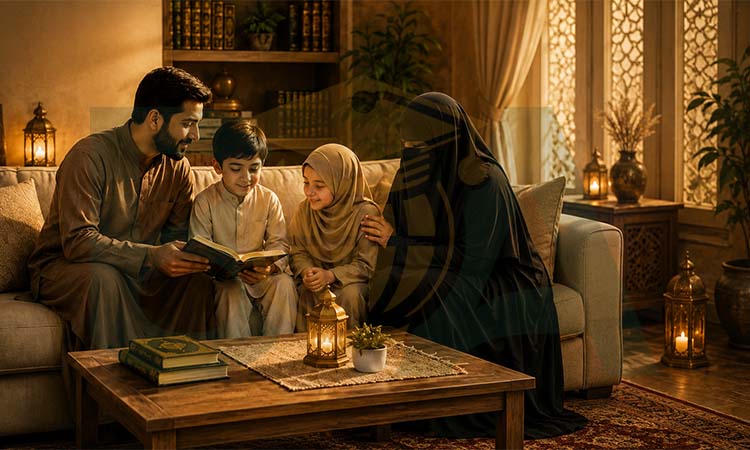
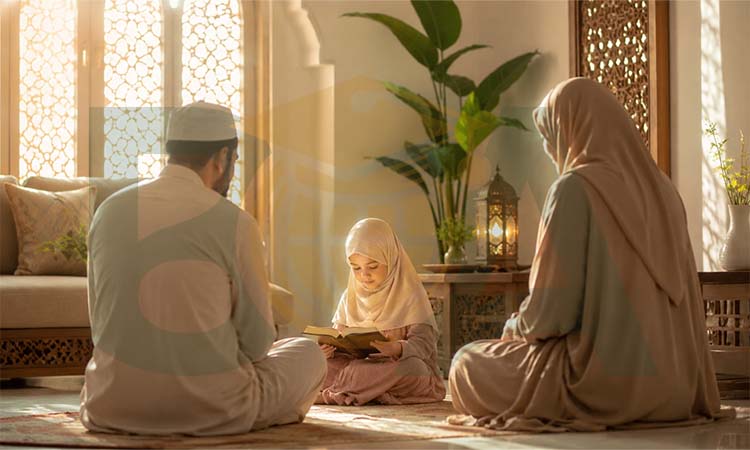
As time passes, the same daughter enters a new stage of life and is honoured with the noble role of a **wife**. It is upon this relationship that the foundation of a family is built, and the stability of society depends upon its strength. Islam has not only granted honour and dignity to a woman as a wife but has also given her rights that were unmatched in many societies of that time. Along with these rights, Islam has entrusted her with responsibilities so that married life may become a model of love, peace, loyalty, and mutual support.
In this part, we will discuss the role of a woman as a **wife**, her status, her rights and responsibilities, and her duties in the light of Islamic teachings, so that the beautiful concept of marriage—built upon love, mercy, and tranquillity—may be better understood.
Marriage in Islam: A Relationship Built on Love and Mercy
Allah, the Lord of all the worlds, says in the Holy Qur’an:
وَمِنْ آيَاتِهِ أَنْ خَلَقَ لَكُمْ مِّنْ أَنْفُسِكُمْ أَزْوَاجًا لِّتَسْكُنُوا إِلَيْهَا وَجَعَلَ بَيْنَكُم مَّوَدَّةً وَرَحْمَةً
“And among His signs is that He created for you spouses from among yourselves so that you may find tranquillity in them, and He placed between you love and mercy.”
(Surah Ar-Rum 30:21)
The Support of Sayyidah Khadijah (رضي الله عنها)
Sayyidah Khadijah al-Kubra (رضي الله عنها) stood beside the Messenger of Allah ﷺ at every stage of his mission. She encouraged him, comforted him, and supported him through every difficulty. One of the clearest examples of her devotion can be seen during the beginning of the revelation.
Allamah Ibn Ishaq (رحمه الله) relates that whenever the Messenger of Allah ﷺ was saddened by the rejection, denial, or hurtful words of the disbelievers, he would return to Sayyidah Khadijah (رضي الله عنها), and through her support and encouragement, Allah would ease his grief and strengthen his heart.
(As-Seerah An-Nabawiyyah, Vol. 1, p. 176)
—
The Loyal Wife of Prophet Ayyub (عليه السلام)
The trial of Prophet Ayyub (عليه السلام) began with a severe illness. His fever became so intense that it felt as though fire was burning throughout his body. Painful sores spread from head to toe, causing constant suffering. As his condition worsened, many of his relatives abandoned him and built a small shelter for him outside the city of Hillah.
When everyone else left him, his wife, **Rahmah bint Ephraim bin Yusuf**, remained by his side. She continued to care for him with patience, sincerity, and complete devotion until Allah granted him recovery.
Lessons from Her Patience and Loyalty
The wife of Prophet Ayyub (عليه السلام) is remembered as one of the greatest examples of loyalty in human history. She remained patient after the loss of wealth and children, endured her husband’s hardship with remarkable perseverance, and never abandoned him during his most difficult days. Instead, she stood beside him with unwavering faith and compassion. Her example continues to inspire Muslim women today.
(Tafsir Ruh al-Ma’ani, Vol. 9, p. 80)
Glad Tidings of Paradise for a Wife
It is narrated by Sayyidatuna Umm Salamah (رضي الله عنها) that the Messenger of Allah ﷺ said:
“Any woman who dies while her husband is pleased with her will enter Paradise.”
(Jami’ At-Tirmidhi, Hadith: 1164)
—
Who Has Greater Rights Over a Woman: Her Husband or Her Parents?
While explaining the rights of a husband, Imam Ahmad Raza Khan (رحمه الله) writes:
“After the rights of Allah Almighty and His Messenger ﷺ, a husband has the greatest right over his wife in matters related to marriage—even greater than the rights of her parents. In these matters, obeying him and protecting his honour and trust are among her primary obligations.”
Visiting Parents After Marriage
He further explains that a wife should not leave her home without her husband’s permission except in cases permitted by Islamic law. With his permission, she may visit where necessary according to their mutual understanding and circumstances.
(Fatawa Razawiyyah, Vol. 24, p. 380)
—
Recommended Reading
Those who wish to study this subject in greater detail may benefit from the following books:
1. Rights of Teachers, Parents, and Spouses
2. Questions and Answers About Hijab (Pardah)
3. How a Muslim Woman Should Be
Conclusion
Islam teaches a wife to fulfil her husband’s rights, remain loyal, display good character, and become a source of peace within the home. At the same time, Islam also instructs the husband and his family to treat their wife and daughter-in-law with kindness, respect, compassion, and good manners.
A woman leaves her childhood home, her parents, and many of her closest relationships to begin a new chapter in life. Therefore, caring for her emotions, preserving her dignity, and respecting her feelings are also part of Islamic teachings.
Love, patience, mutual respect, and cooperation are the qualities that turn a house into a peaceful home. When the husband, wife, and family members fulfil one another’s rights, the household becomes a place of mercy, harmony, and blessings. This is the balanced family system that Islam teaches.
May Allah Almighty grant us the ability to fulfil our responsibilities, honour one another’s rights, and build families based on faith, mercy, and good character.
Ameen.
To Be Continued in Part 3…