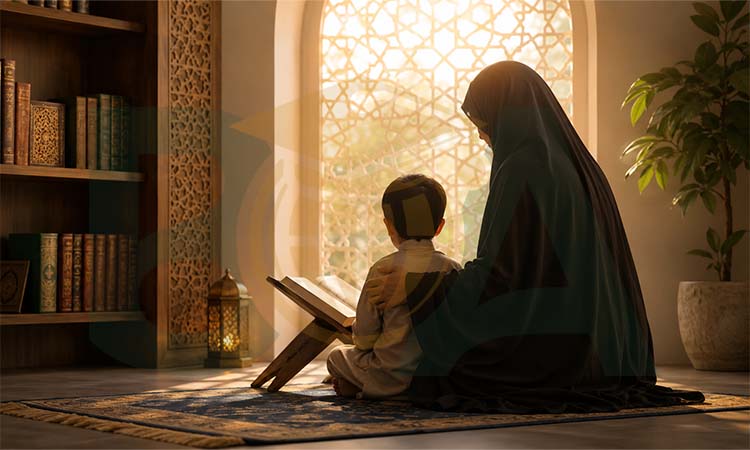
Introduction
In the previous parts of this series, we explored the honoured status of a woman as a daughter and a wife in Islam. We learned how Islamic teachings elevate these relationships through mercy, dignity, responsibility, and mutual respect. In this part, we turn to another of the most honoured and influential roles a woman can have—the role of a mother.
There are few relationships in this world whose greatness cannot truly be measured by words, and motherhood is one of them. A mother sacrifices her own comfort for the happiness of her children, bears countless hardships with patience, and dedicates her life to nurturing the next generation. Many blessings in life may be replaced, but the love, care, and compassion of a mother can never be replaced.
For this reason, Islam has given the mother an exceptionally high status. It places Paradise beneath her feet, regards serving her as a means of earning Allah’s pleasure, and makes honouring her one of the greatest acts of righteousness. A mother is not merely an individual within the family; she is the first teacher, the first school, and the first source of moral and spiritual development. When a mother nurtures her children upon faith, good character, and Islamic values, she lays the foundation for a righteous family and, ultimately, a righteous society.
In today’s world, where material pursuits and changing lifestyles often weaken family bonds, understanding the rights, responsibilities, and honour of motherhood has become more important than ever. This article highlights the noble status of a mother in the light of the Holy Qur’an and the Sunnah, and explains her responsibilities in raising children according to Islamic teachings.
The Honour of a Mother in the Holy Qur’an
Allah Almighty says:
وَوَصَّيْنَا الْإِنسَانَ بِوَالِدَيْهِ ۖ حَمَلَتْهُ أُمُّهُ وَهْنًا عَلَىٰ وَهْنٍ وَفِصَالُهُ فِي عَامَيْنِ أَنِ اشْكُرْ لِي وَلِوَالِدَيْكَ ۖ إِلَيَّ الْمَصِيرُ
Translation:
“And We enjoined upon man concerning his parents. His mother carried him in weakness upon weakness, and his weaning is in two years. Give thanks to Me and to your parents. To Me is the final return.”
(Surah Luqman, Para 21, Verse 14)
Explaining this verse, Hazrat Sufyan bin Uyaynah (may Allah have mercy on him) stated that whoever performs the five daily prayers has fulfilled gratitude to Allah, and whoever prays for his parents after the five daily prayers has shown gratitude towards them.
(Tafsir al-Baghawi)
The Mother’s Right Comes First
Hazrat Abu Hurairah (may Allah be pleased with him) narrates that a man came to the Messenger of Allah ﷺ and asked:
“O Messenger of Allah! Who deserves my best companionship?”
The Prophet ﷺ replied:
“Your mother.”
He asked again:
“Then who?”
The Prophet ﷺ replied:
“Your mother.”
He asked a third time:
“Then who?”
The Prophet ﷺ again replied:
“Your mother.”
When he asked for the fourth time, the Prophet ﷺ replied:
“Your father.”
(Sahih al-Bukhari, Hadith: 5971)
This beautiful Hadith demonstrates the immense sacrifices a mother makes throughout her life and the extraordinary honour Islam grants her.
Paradise Lies Beneath the Mother’s Feet
Hazrat Jahimah (may Allah be pleased with him) came to the Prophet ﷺ seeking permission to participate in Jihad.
The Messenger of Allah ﷺ asked:
“Do you have a mother?”
He replied:
“Yes.”
The Prophet ﷺ then instructed him:
فَالْزَمْهَا فَإِنَّ الْجَنَّةَ تَحْتَ رِجْلَيْهَا
“Remain in her service, for Paradise lies beneath her feet.”
(Sunan an-Nasa’i, Hadith: 3101)
This Hadith highlights that serving one’s mother is among the greatest means of attaining Paradise.
A Mother’s Responsibilities Towards Her Children
Islam grants mothers immense honour, but it also entrusts them with great responsibilities. The home is the first place where a child’s character, faith, and manners are shaped.
Among a mother’s most important responsibilities are:
Loving her children and treating them with kindness and compassion.
Providing proper upbringing while striving for both their worldly and religious success.
Maintaining their cleanliness, health, and personal hygiene.
Breastfeeding them whenever possible, as mother’s milk has tremendous physical and emotional benefits.
Protecting them from unnecessary fear, grief, and emotional distress.
Understanding their needs even before they can express themselves through words.
Avoiding frightening, threatening, or humiliating them, as such behaviour weakens a child’s confidence.
Teaching them the names of Allah Almighty and His Messenger ﷺ as their very first words.
Giving priority to Qur’anic education and basic Islamic knowledge when they become old enough to learn.
Instilling Islamic manners, noble character, and the beliefs of Ahl al-Sunnah from an early age.
Speaking respectfully to children so they naturally develop respectful speech and behaviour.
Encouraging righteous deeds while discouraging sinful habits.
Avoiding foul language, since children imitate what they observe.
Teaching purification, Wudu, Ghusl, and Salah from the age of seven while becoming a practical example through regular prayer.
Protecting them from harmful company and unbeneficial entertainment.
Promoting healthy eating habits by preferring fresh fruits over excessive sweets and junk food.
Treating sons and daughters fairly and showing special kindness to daughters whenever appropriate.
Ensuring modest clothing for young girls in accordance with Islamic values.
Limiting children’s unnecessary exposure to mobile phones and excessive screen time.
Teaching the inspiring stories of the Prophets (peace be upon them), the Noble Companions, the Ahl al-Bayt, and the Awliya so that love for these righteous personalities develops in their hearts.
When children reach maturity, arranging their marriage without unnecessary delay to a Sunni spouse of sound creed, good character, and religious commitment.
Conclusion
A mother’s influence extends far beyond the walls of her home. She shapes minds, nurtures faith, builds character, and prepares future generations. The strength of a family, and ultimately the strength of society, begins with the upbringing children receive from their mother.
May Allah Almighty grant every Muslim mother the ability to fulfil this noble responsibility with sincerity, wisdom, and steadfastness. May He bless our children with sound Islamic upbringing, noble character, and unwavering faith, and make them a source of goodness for their families, their communities, and the Ummah.
Ameen, by the honour of the Beloved Prophet Muhammad ﷺ.
Allah the Almighty declares in the Holy Qur’an:
وَوَصَّيْنَا الْإِنسَانَ بِوَالِدَيْهِ ۖ حَمَلَتْهُ أُمُّهُ وَهْنًا عَلَىٰ وَهْنٍ وَفِصَالُهُ فِي عَامَيْنِ أَنِ اشْكُرْ لِي وَلِوَالِدَيْكَ ۖ إِلَيَّ الْمَصِيرُ
Translation:
“And We have enjoined upon man concerning his parents. His mother carried him in weakness upon weakness, and his weaning is in two years. Be grateful to Me and to your parents. To Me is the final return.”
(Surah Luqman, Para 21, Verse 14)
Hazrat Sufyan bin Uyaynah (May Allah have mercy on him), while explaining this verse, stated that whoever performs the five daily prayers has fulfilled gratitude to Allah Almighty, and whoever prays for his parents after those prayers has fulfilled gratitude to his parents.
(Tafsir al-Baghawi, under the above verse)
The Mother Has the Greatest Right
It is narrated by Hazrat Abu Hurairah (May Allah be pleased with him) that a man came to the Holy Prophet ﷺ and asked:
“O Messenger of Allah ﷺ! Who deserves my best companionship and kind treatment the most?”
The Holy Prophet ﷺ replied:
“Your mother.”
The man asked again:
“Then who?”
He replied:
“Your mother.”
The man asked once more:
“Then who?”
Again, the Holy Prophet ﷺ replied:
“Your mother.”
The man asked for the fourth time:
“Then who?”
The Holy Prophet ﷺ finally replied:
“Your father.”
(Sahih al-Bukhari, Kitab al-Adab, Hadith: 5971)
Paradise Lies Beneath the Mother’s Feet
Hazrat Jahimah (May Allah be pleased with him) came to the blessed court of the Holy Prophet ﷺ and said:
“O Messenger of Allah ﷺ! I wish to participate in Jihad in the path of Allah, and I have come to seek your advice.”
The Messenger of Allah ﷺ asked:
“Do you have a mother?”
He replied:
“Yes.”
The Holy Prophet ﷺ then instructed him:
فَالْزَمْهَا فَإِنَّ الْجَنَّةَ تَحْتَ رِجْلَيْهَا
“Remain in her service, for Paradise lies beneath her feet.”
(Sunan an-Nasa’i, Kitab al-Jihad, Hadith: 3101)
Rights and Responsibilities of a Mother Towards Her Children
Every mother is responsible for loving her children, treating them with affection and kindness, striving for their happiness, and making every effort to provide them with proper upbringing and education.
She should take special care of their cleanliness and hygiene. If there is no medical reason preventing it, she should nurse her children herself, as a mother’s milk has a profound impact on a child’s physical and emotional development.
Children should be protected from unnecessary grief, fear, and distress. Since infants cannot express themselves verbally, mothers should learn to understand their gestures, expressions, and needs.
Children should never be frightened or constantly threatened, as this weakens their confidence and affects their emotional well-being.
As soon as children begin to speak, they should first be taught to pronounce the blessed names of Allah Almighty and His Beloved Messenger ﷺ.
When boys and girls reach the age of learning, they should first receive education in the Holy Qur’an and essential Islamic knowledge (Deeniyat). They should be taught Islamic manners, noble character, the teachings of Islam, and the correct beliefs of Ahl al-Sunnah wa al-Jama’ah. Parents should address children respectfully so they naturally develop the habit of speaking respectfully to others.
Good deeds should be encouraged, while evil actions should be discouraged. Parents must avoid using abusive or foul language because children imitate what they hear and observe.