
Introduction
Throughout history, the rise and fall of civilizations has never depended solely on wealth, military strength, or architectural achievements. Lasting societies are built upon strong moral values, noble character, modesty, and purity.
Whenever ḥayā (modesty) is preserved, chastity is valued, and ethical principles are upheld, societies flourish with dignity, peace, and stability. However, when modesty is dismissed and immorality is celebrated under the name of “freedom,” moral decline inevitably begins, regardless of material progress.
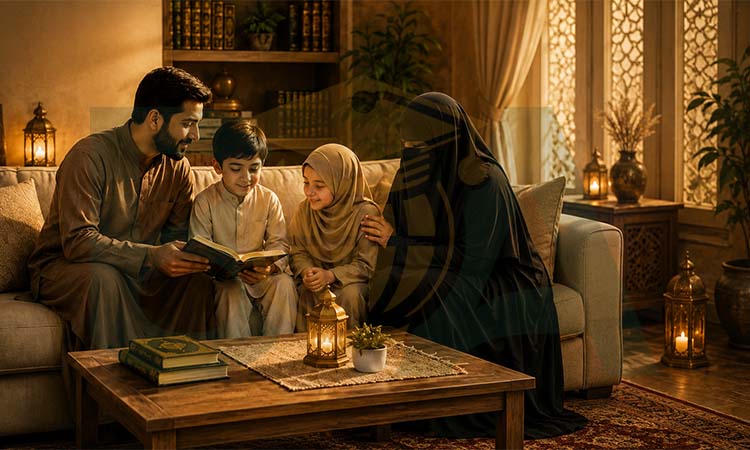
In Islam, a woman’s modesty and character are not merely personal virtues—they are essential pillars of a healthy family and a righteous society. A modest woman nurtures a righteous home, and righteous homes together build righteous nations.
In this fourth part of our series, we explore the Islamic teachings regarding Hijab, modesty, chastity, and the responsibility of preserving moral values through the guidance of the Qur’an and the Sunnah.
Lowering the Gaze: A Command for Both Men and Women
Islam places responsibility on both men and women to preserve modesty.
Allah Almighty says:
“Tell the believing men to lower some of their gaze and guard their chastity. That is purer for them.”
(Surah An-Nur 24:30)
Immediately afterward, Allah addresses believing women:
“And tell the believing women to lower some of their gaze, guard their chastity, and not display their adornment…”
(Surah An-Nur 24:31)
These verses demonstrate that modesty begins with the heart, the eyes, and personal conduct before it extends to outward appearance.
Hijab: A Divine Command, Not a Cultural Tradition
In today’s world, some claim that Hijab prevents women from achieving success or that it limits personal freedom. Others incorrectly argue that Hijab is merely a cultural practice or an invention of religious scholars.
Islam teaches otherwise.
Hijab is not the opinion of scholars or a cultural custom. It is a direct command from Allah Almighty and His Messenger ﷺ. Success in this life and the Hereafter lies in accepting Allah’s guidance with sincerity and obedience.
The Qur’anic Command Regarding Hijab
Allah Almighty commands:
“O Prophet! Tell your wives, your daughters, and the believing women to draw their outer garments closely over themselves.”
(Surah Al-Ahzab 33:59)
This verse establishes Hijab as part of Islamic guidance for believing women, emphasizing dignity, modesty, and protection.
The Prophet ﷺ and Interaction with Non-Mahram Women
The practical example of the Messenger of Allah ﷺ demonstrates the importance of observing Islamic boundaries.
Sayyidah A’ishah رضي الله عنها narrated that while accepting the pledge of allegiance from women, the blessed hand of the Prophet ﷺ never touched the hand of a non-Mahram woman.
Reference: Sunan Ibn Majah (Hadith 2875)
Similarly, Sayyidah Umaymah bint Ruqayqah رضي الله عنها reported that the Prophet ﷺ said:
“Indeed, I do not shake hands with women.”
Reference: Sunan Ibn Majah (Hadith 2874)
These narrations remind Muslims to observe the limits established by the Shari’ah in their dealings with non-Mahram members of the opposite gender.
Practices Must Be Measured by the Qur’an and Sunnah
Sometimes certain customs develop within communities that should be evaluated carefully.
For example, reports exist of gatherings where women sit before a spiritual guide (Pir), hold his hand during spiritual practices, or interact without observing the limits prescribed by Islamic teachings.
Every such practice should always be examined according to:
- The Qur’an
- The Sunnah
- The guidance of qualified Islamic scholars
No custom should be accepted if it contradicts authentic Islamic teachings.
The Honor of Sayyidah Fatimah al-Zahra رضي الله عنها
The noble status of Sayyidah Fatimah رضي الله عنها is highlighted in a narration reported by Imam Jalal al-Din al-Suyuti رحمه الله.
The Messenger of Allah ﷺ said:
“On the Day of Judgment, a caller will announce: ‘Lower your heads and your gaze so that Fatimah, the daughter of Muhammad ﷺ, may pass over the Sirat.'”
Reference: Al-Jami’ al-Saghir (Hadith 822)
This narration reflects the exceptional honor and dignity granted to the beloved daughter of the Prophet ﷺ.
Is Hijab Required Before a Spiritual Guide (Pir)?
Imam Ahmad Raza Khan رحمه الله was asked whether a female disciple must observe Hijab before her Pir if he is a non-Mahram.
He replied that Hijab remains obligatory, and in matters of Hijab there is no distinction between a Pir and any other non-Mahram man.
Reference: Fatawa Ridawiyyah (Vol. 22, p. 505)
A Serious Warning Regarding Family Responsibility
Islam places responsibility upon guardians to protect the modesty and dignity of their families.
The Messenger of Allah ﷺ warned that among those who will not enter Paradise are:
- The Dayyuth (one who lacks protective concern for the modesty of his family),
- A woman who deliberately imitates men,
- A habitual consumer of intoxicants.
Reference: Majma’ al-Zawa’id (Hadith 7722)
This Hadith reminds Muslims of the importance of preserving Islamic values within the family.
“I Lost My Son, But Not My Modesty”
One of the most inspiring examples of modesty comes from Sayyidah Umm Khalad رضي الله عنها.
After her son was martyred in battle, she came to the Prophet ﷺ seeking information while still observing her face covering.
Someone remarked:
“Even now, you have covered your face?”
She replied:
“I have lost my son, but I have not lost my modesty.”
Reference: Sunan Abi Dawud (Hadith 2488)
This remarkable incident demonstrates that modesty remains a lifelong value, even during moments of immense grief.
Lessons for Modern Families
Today, many social gatherings—including weddings and family functions—often involve unnecessary free mixing between unrelated men and women.
Instead of discouraging such practices, they are sometimes accepted as normal. In some cases, family members themselves encourage clothing and behavior that conflict with Islamic principles of modesty.
Islam teaches that preserving dignity, modesty, and proper boundaries strengthens both the family and society.
Hijab Before a Non-Mahram Teacher
Imam Ahmad Raza Khan رحمه الله was also asked whether Hijab becomes obligatory before a male teacher once a girl reaches puberty.
He replied that yes, once she attains puberty, observing Hijab from a non-Mahram teacher becomes obligatory.
He further explained that there is no distinction between a teacher, scholar, Pir, or any other non-Mahram man regarding the rulings of Hijab.
Reference: Fatawa Ridawiyyah (Vol. 23, p. 639)
Conclusion
Islamic teachings regarding modesty and Hijab are not intended to restrict dignity—they are designed to preserve it.
The Qur’an and Sunnah emphasize that both men and women share responsibility in protecting chastity, lowering the gaze, and maintaining respectful boundaries.
When these principles are practiced sincerely, families become stronger, communities become healthier, and society benefits from moral stability and mutual respect.
Supplication
May Allah Almighty accept this humble effort and make it a means of continuous reward (Ṣadaqah Jāriyah) for the author, his parents, teachers, spiritual mentors, and all believing Muslims.
May Allah grant us the ability to live according to the teachings of the Qur’an and Sunnah, protect our families through modesty, chastity, and Hijab, and enable future generations to uphold authentic Islamic values.
May He bless our mothers, daughters, sisters, and families with righteousness, purity, dignity, and steadfastness upon the truth.