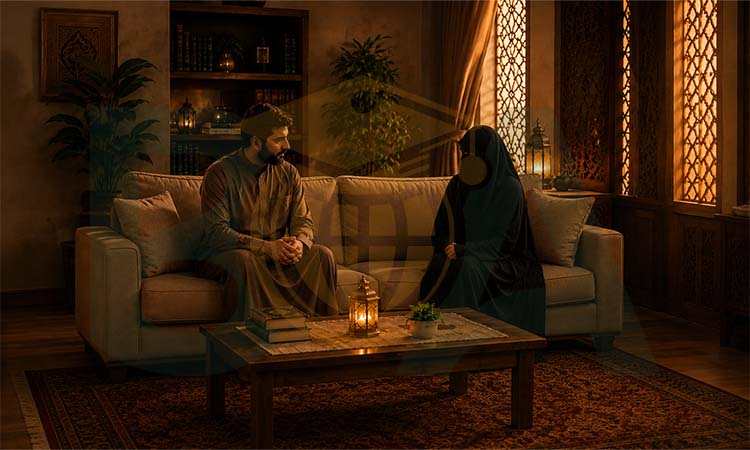
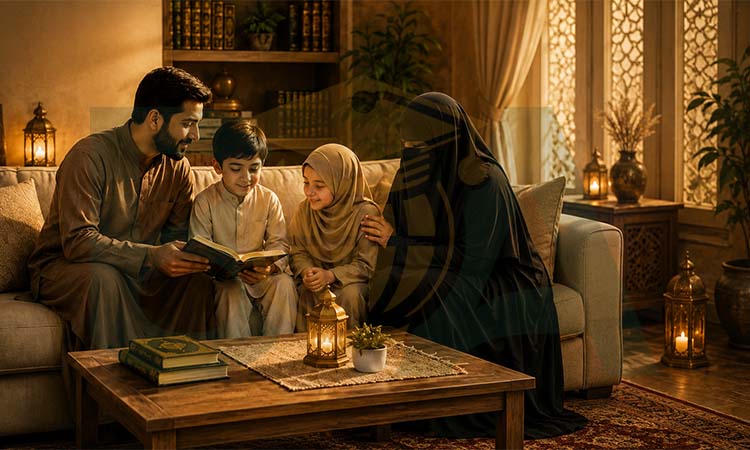
in the previous part, it was explained that Islam has made a man the guardian and caretaker of his family. On the Day of Judgment, he will be questioned about those under his care, including his wife and children. It is now important to understand the rights of a wife and the responsibilities of a husband. Although Islam gives the husband a leadership role in the family, he is expected to lead with justice, mercy, love, and responsibility.
Today, some people think that being a husband only means having authority and giving orders. However, Islam teaches a husband to be the well-wisher, protector, and supporter of his wife. If he fails to fulfill his responsibilities, he will be accountable before Allah.
Allah says:
“Live with them in kindness.”
(Surah An-Nisa 4:19)
This verse instructs husbands to treat their wives with kindness, respect, gentleness, and good manners. A peaceful home is not built on financial comfort alone. It is built through good character, kind speech, and mutual trust.
If disagreements arise between husband and wife, they should show patience and forgive one another. The Messenger of Allah ﷺ said:
“Whoever remains patient, Allah grants him patience. No one is given a gift better and greater than patience.”
(Sahih al-Bukhari 1449; Sahih Muslim 1053)
In many homes today, both husband and wife fail to respect each other’s rights. Some men want to treat their wives worse than servants, while some women expect their husbands to fulfill every wish and live only according to their desires.
It should be remembered that Allah has given the man the responsibility of leading the family.
Allah says:
“Men are the protectors and maintainers of women.”
(Surah An-Nisa 4:34)
The Prophet ﷺ also explained the great rights of a husband.
Imam Ahmad narrates from Sayyiduna Anas (may Allah be pleased with him) that the Messenger of Allah ﷺ said:
“If it were permissible for one person to prostrate before another, I would have commanded a wife to prostrate before her husband because of the great right he has over her. By the One in Whose Hand is my soul, even if a husband’s body were covered with wounds from head to toe, and she cleaned them, she still would not have fulfilled his right.”
(Musnad Ahmad, Hadith 12614)
Today, many men face unemployment, financial difficulties, personal struggles, or a limited income. At the same time, they are often expected to meet demands that are beyond their ability.
If a man fulfills every demand, he is praised. But if he cannot, he may be disrespected or looked down upon.
If a man has only a small income, how can he fulfill every request?
In such situations, some women criticize or insult their husbands. What should such a man do? Should he steal, rob others, take what does not belong to him, or lie?
Some men become so distressed that they even take their own lives. May Allah protect us all from this.
Women should show patience in such circumstances and place their trust in Allah’s mercy. In shā’ Allāh, difficult days will pass, and better days will come.
Allah says:
“Allah does not burden any soul beyond its capacity.”
(Surah Al-Baqarah 2:286)
Women who hurt or insult their husbands should also remember the following hadith.
Imam Ahmad, Imam al-Tirmidhi, and Imam Ibn Majah narrate from Sayyiduna Mu’adh (may Allah be pleased with him) that the Messenger of Allah ﷺ said:
“When a woman hurts her husband in this world, the women of Paradise say: ‘May Allah deal with you. Do not hurt him. He is only with you for a short time, and soon he will leave you and come to us.'”
(Jami’ al-Tirmidhi, Hadith 1177)
May Allah grant us the ability to follow the teachings of the Qur’an and the Sunnah. Āmīn.