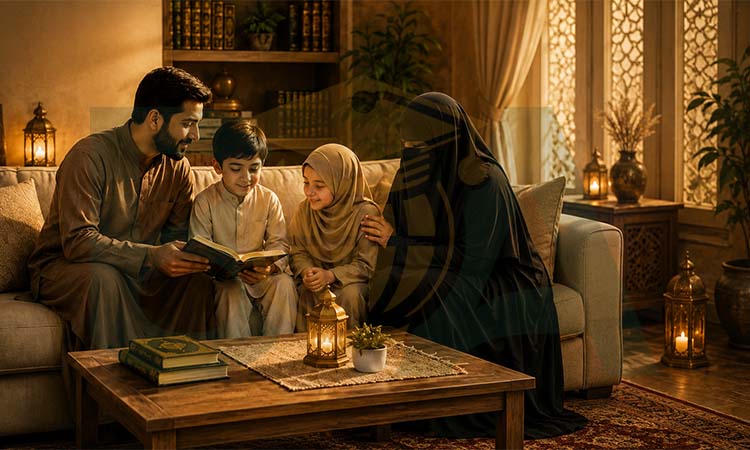
In the previous part, it was explained that Allah has made the man the guardian and caretaker of the family. Along with this responsibility, Islam has also given the husband certain rights over his wife. At the same time, one of the beauties of Islam is that it does not only mention rights but also defines responsibilities, so that family life is based on justice and balance. Islam does not support one-sided rights. Every right comes with a responsibility.
Just as a wife is expected to obey her husband in what is right and fulfill his rights, the husband is also required to fulfill the rights of his wife. A Muslim man is not only the head of the family but also the protector, provider, well-wisher, and caretaker of his wife.
The first responsibility of a husband is to provide for his wife’s maintenance and financial needs. Allah says:
“Men are the protectors and maintainers of women because Allah has given one more responsibility than the other and because they spend from their wealth.”
(Surah An-Nisa 4:34)
This verse shows that one of the reasons Allah has given the husband this responsibility is that he provides for his wife and family. Therefore, a husband should provide food, daily necessities, and other essential needs according to his ability.
Providing suitable accommodation for his wife is also the husband’s responsibility. Allah says:
“Let them live where you live, according to your means.”
(Surah At-Talaq 65:6)
This verse teaches that a husband should provide a suitable place for his wife to live according to his financial ability, where she can live with dignity and respect.
Providing clothing and other necessary expenses is also the husband’s duty. During the Farewell Pilgrimage, the Messenger of Allah ﷺ said:
“Listen carefully. I advise you to treat women well. They are under your care, and apart from the marital relationship, you have no right over them except what Allah has allowed.”
(Al-Targhib wa Al-Tarhib, Vol. 2, p. 39)
Another important responsibility of the husband is to provide maintenance for his wife and children.
The Prophet ﷺ also encouraged good treatment towards one’s wife. He taught that whatever a person spends for the sake of Allah is rewarded, even the morsel of food placed into his wife’s mouth. In another narration, feeding one’s wife with a good intention is considered an act of charity.
The Messenger of Allah ﷺ said:
“Whatever you spend is charity for you, even the morsel that you place in your wife’s mouth.”
(Sahih al-Bukhari, Vol. 7, p. 62)
It is mentioned in Fatawa Tatarkhaniyah:
“The obligatory maintenance includes food, clothing, and accommodation.”
(Fatawa Tatarkhaniyah, Vol. 5, p. 358)
Another important responsibility of a husband is to show good character and treat his wife kindly. Allah says:
“Live with them in kindness.”
(Surah An-Nisa 4:19)
The Messenger of Allah ﷺ said:
“The best among you is the one who is best to his family, and I am the best among you to my family.”
(Jami’ al-Tirmidhi, Hadith 3895)
A Muslim husband should avoid harshness, abusive language, humiliation, and ظلم. Instead, he should treat his wife with love, mercy, kindness, and good manners.
The husband is also responsible for the religious upbringing of his family. Allah says:
“O believers, protect yourselves and your families from the Fire.”
(Surah At-Tahrim 66:6)
This verse teaches that just as a Muslim is responsible for improving himself, he is also responsible for the Islamic education and upbringing of his family. Every Muslim should teach, or arrange for the teaching of, Islamic knowledge to his wife, children, and those under his care so that they may be protected from the Fire.
A husband should help his wife learn and practice Salah, fasting, modesty, the lawful and unlawful, and other Islamic teachings.
Qualities of a Good Husband :
He fulfills all the rights of his wife.
He lowers his gaze and remains loyal to his wife.
He does not oppress or mistreat his wife.
He keeps his wife’s faults private.
He treats his wife’s family with kindness.
He cares for his wife’s comfort.
He remains patient with her difficult moments.
He protects her dignity and honour.
He advises her with wisdom and encourages good while discouraging wrong.
He does not become miserly in spending on her.
He appreciates her good qualities and overlooks minor mistakes.
He does not let the words of others lead him to wrong his wife and children or destroy his own home.
To Be Continued in Part 4…