Societies are not built by laws alone. They are built through character, responsibility, integrity, and a sincere sense of duty. When individuals fulfil their responsibilities honestly, the rights of others are naturally protected. However, when everyone focuses only on demanding their own rights while neglecting their responsibilities, society becomes a place of unrest, injustice, and disorder.
Unfortunately, this is one of the major challenges facing our society today. There is a great deal of discussion about rights, but very little emphasis on fulfilling responsibilities.
Islam is a religion of balance. It grants human beings rights while also placing responsibilities upon them. The Qur’an and Sunnah teach us that responsibility, trustworthiness, justice, and service are essential elements of a healthy society. A person who fulfils his responsibilities is, in reality, protecting the rights of others.
Justice Requires Both Rights and Responsibilities
Allah Almighty says:
﴾إِنَّ اللَّهَ يَأْمُرُ بِالْعَدْلِ وَالإِحْسَانِ﴿
Translation:
“Indeed, Allah commands justice and excellence.”
(Surah An-Nahl, Verse 90)
Justice does not simply mean demanding one’s own rights. True justice also requires a person to fulfil the rights of others.
This principle lies at the heart of Islamic social life. A balanced society is one in which people are conscious not only of what they deserve, but also of what they owe to others.
Everyone Wants Their Rights, But Who Fulfils Their Duties?
Look around us today and almost every group has a complaint.
Parents complain that their children are no longer obedient.
Children complain that their parents do not understand their needs.
Husbands complain about their wives, while wives complain about their husbands.
Teachers are unhappy with their students, while students complain about their teachers.
Employees accuse employers of injustice, while employers accuse employees of dishonesty and negligence.
In other words, everyone has become concerned about protecting their own rights, but very few are willing to become guardians of their own responsibilities.
The problem is not always that people do not know their rights. The deeper problem is that they have forgotten their duties.
Every Person Is Responsible
The Messenger of Allah ﷺ said:
“Each of you is a guardian, and each of you is responsible for those under your care.”
(Sahih al-Bukhari, Hadith: 893)
This beautiful teaching reminds us that a person’s true worth is not measured by the number of demands they make, but by the responsibilities they fulfil.
Every individual has been entrusted with certain responsibilities, whether as a parent, spouse, teacher, employer, employee, leader, or member of society.
Islam teaches us to focus first on fulfilling what has been entrusted to us.
Leadership Is a Responsibility, Not a Privilege
Islamic history provides many examples of leaders who understood this principle.
The Rightly Guided Caliphs regarded leadership not as an opportunity for personal privilege, but as a trust and responsibility.
Sayyidunā ʿUmar ibn al-Khaṭṭāb رضي الله عنه was known for personally checking on the condition of people during the night. His concern was that no needy person should suffer because of his negligence.
He understood that leadership meant being accountable for the people under his care.
This sense of responsibility is one of the reasons why his era continues to be remembered as a powerful example of justice and accountability.
Responsibilities Within the Family
The same principle applies to family life.
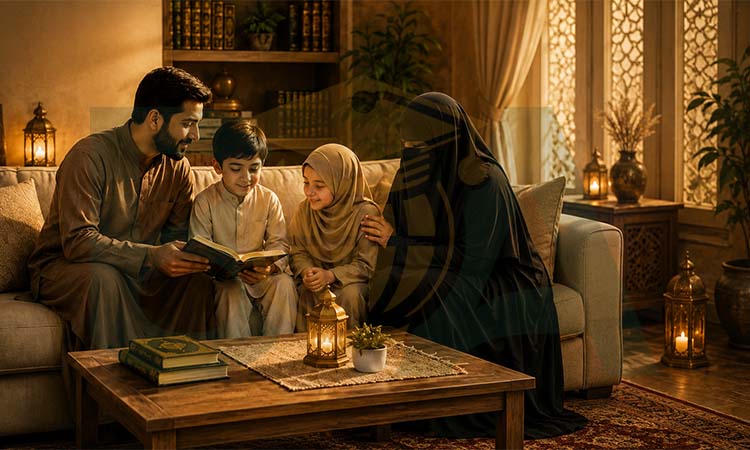
If a husband fulfils his responsibilities with sincerity, treats his wife and family with good character, and protects their rights, the home can become a place of peace and tranquillity.
Likewise, when a wife fulfils her responsibilities with love, loyalty, cooperation, and goodwill, the home becomes a source of mercy and comfort.
But when both spouses focus only on what they want to receive while forgetting what they are required to give, the same home can become a centre of conflict and unhappiness.
A successful marriage is not built on two people constantly asking, “What am I getting?”
It is built on two people asking, “What can I give?”
Parents and Children: Rights on Both Sides
The relationship between parents and children also reflects this balance.
Parents cannot simply demand obedience while neglecting their responsibilities of love, care, upbringing, education, and religious guidance.
At the same time, children cannot demand freedom and comfort while ignoring the responsibilities of respect, service, obedience in righteousness, and care for their parents.
A healthy family system is built when both generations understand their responsibilities alongside their rights.
Rights and Responsibilities in Business
The same principle applies to professional and commercial life.
A businessman wants profit, but sometimes overlooks honesty.
A customer demands quality, but may still try to deceive the seller.
An employee expects a full salary, but may be careless with working hours and responsibilities.
On the other hand, some employers demand maximum effort from their employees while neglecting their legitimate rights and needs.
When both sides focus only on what they want to receive, trust begins to disappear.
And without trust, no business, institution, or society can truly prosper.
Social Media and the Culture of Blame
Social media has also contributed to this mindset.
People can write lengthy posts about the mistakes of others while remaining silent about their own shortcomings.
Everyone wants to prove that they are the victim, but very few people stop to examine their own behaviour.
We are often quick to ask:
“Why is everyone else not doing their duty?”
But perhaps we should also ask:
“Am I fulfilling mine?”
Real social reform always begins with self-reform.
Before demanding change from others, we must be willing to examine ourselves.
Rights and Responsibilities: Two Sides of the Same Coin
The reality is that rights and responsibilities are two sides of the same coin.
If every person sincerely fulfils their responsibilities, the rights of others will naturally be protected.
The prosperity of a society does not depend merely on how many laws exist to protect people’s rights. It also depends on how honestly its people fulfil their responsibilities.
A society where everyone demands justice but few practise justice cannot remain peaceful for long.
Teaching the Next Generation
Our homes, schools, mosques, and social institutions should not only teach people about their rights. They must also develop a strong sense of responsibility.
The younger generation needs to understand that a successful person is not merely someone who knows how to claim their rights.
A truly successful person is someone who finds satisfaction in fulfilling the rights of others.
This is part of Islamic character and a reflection of the teachings of the Prophet ﷺ.
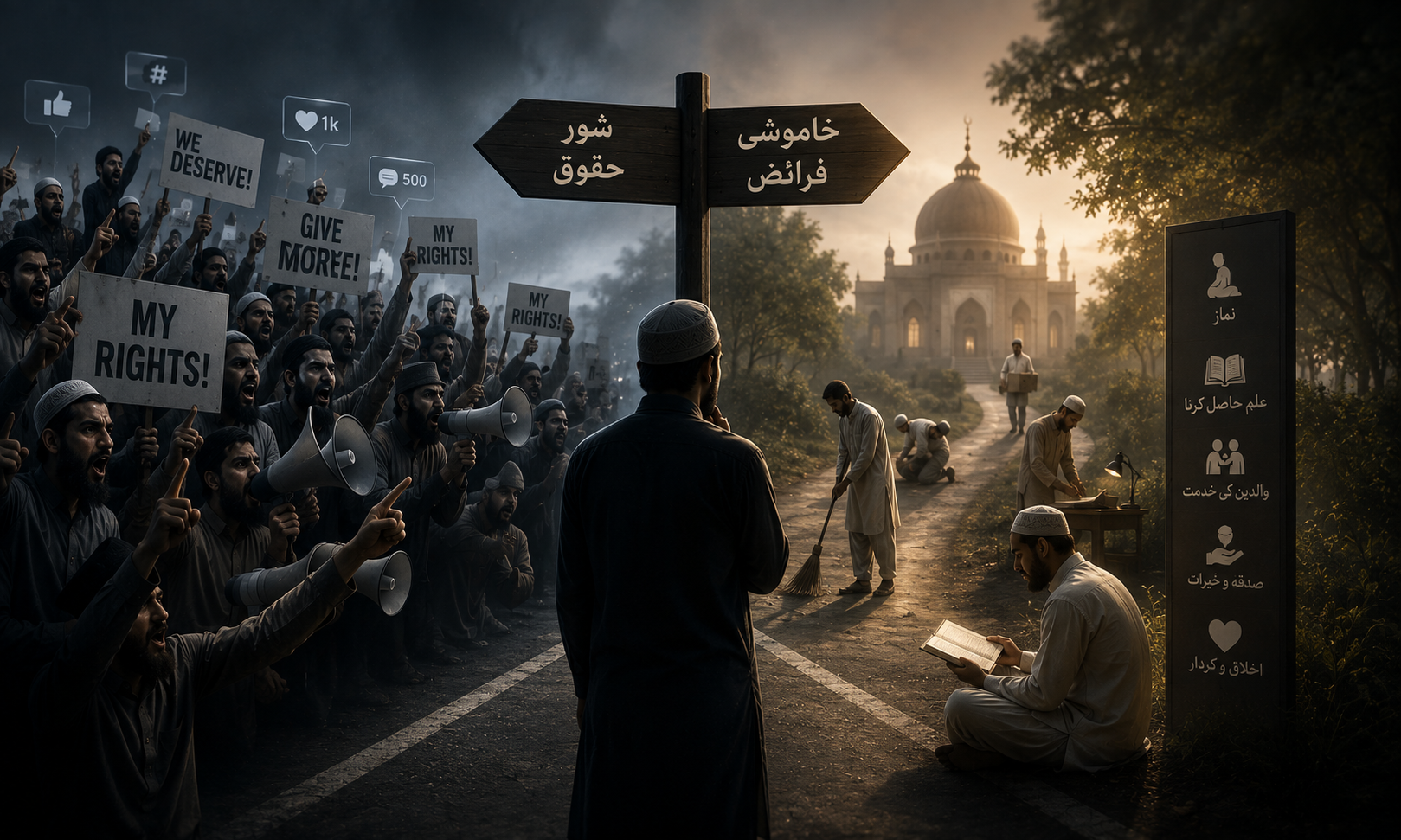
From Slogans to Character
If we want justice in our society, stronger families, trustworthy institutions, and greater confidence between the public and those in authority, we must focus on character rather than slogans alone.
Talking about rights may create temporary emotions.
But quietly fulfilling responsibilities can transform families, institutions, and entire generations.
The greatest change often begins with responsibilities that nobody applauds and duties that nobody sees.
Conclusion
Islam teaches us that rights and responsibilities cannot be separated.
Before asking what others owe us, we should ask what we owe them.
Before pointing towards the shortcomings of others, we should examine our own actions.
And before demanding justice from society, we should ensure that justice begins with us.
When individuals fulfil their responsibilities with sincerity, honesty, and fear of Allah, the rights of others are naturally protected. Families become stronger, institutions become more trustworthy, and society moves closer to justice and harmony.
The noise of rights may create temporary attention, but the quiet fulfilment of responsibilities has the power to change generations.
May Allah Almighty grant us the ability to recognise our responsibilities, fulfil the rights of others, establish justice in our lives, and develop the character that pleases Him.
Āmīn.