Introduction
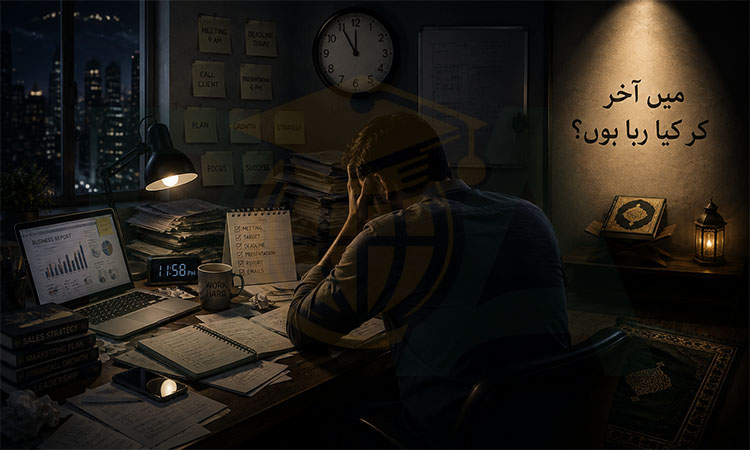
In today’s fast-paced world, being busy is often seen as a sign of success. From morning until night, people remain occupied with work, business, responsibilities, social media, and countless daily concerns. Yet despite this constant activity, many eventually find themselves asking a troubling question:
“What am I actually doing with my life?”
Sometimes, the answer is silence.
Modern people often complain about having too little time, yet rarely stop to consider whether their lives have a clear purpose. Perhaps this is why, despite material progress and countless comforts, peace of heart seems increasingly difficult to find. We may have more to do than ever before, but not always a meaningful reason for doing it.
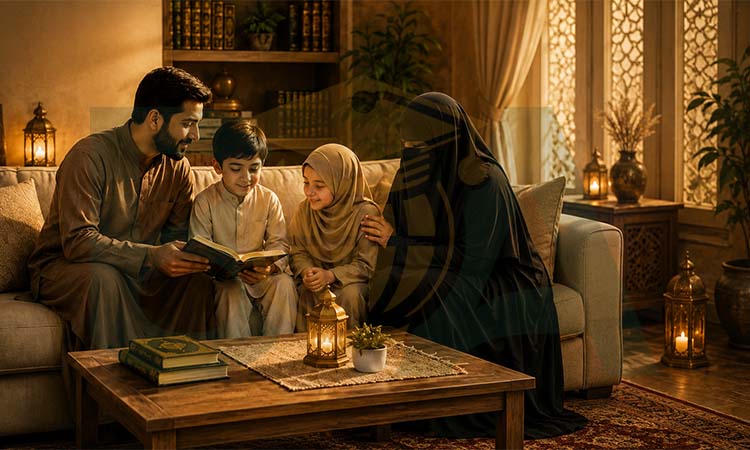
Islam does not teach us merely to remain busy. It teaches us to live with purpose.
The True Purpose of Life
Allah Almighty says in the Holy Qur’an:
﴾وَمَا خَلَقْتُ الْجِنَّ وَالْإِنسَ إِلَّا لِيَعْبُدُونِ﴿
Translation:
“And I did not create the jinn and mankind except to worship Me.”
(Surah Adh-Dhāriyāt, Verse 56)
This verse clearly reminds us that the ultimate purpose of human life is the worship of Allah Almighty and seeking His pleasure. When life becomes disconnected from this purpose, even apparent success can begin to feel empty.
A person may have a successful career, a thriving business, a busy schedule, and a full social life, yet still experience emptiness within. He spends his morning at the office, his evening in business, and his night scrolling through social media or spending time in unnecessary distractions.
Outwardly, he is busy.
But inwardly, his heart may be restless, his thoughts scattered, and his soul empty.
When our busyness brings us further away from Allah rather than closer to Him, it is a warning that we may be active without truly moving toward our destination.
Make Time for What Truly Matters
Sayyidunā Abū Hurayrah رضي الله عنه narrates that the Prophet ﷺ reported that Allah Almighty says:
“O son of Ādam! Free yourself for My worship, and I will fill your heart with contentment and remove your poverty. But if you do not do so, I will fill your hands with occupations and will not remove your poverty.”
(Jāmi‘ al-Tirmidhī, Hadith: 2474)
This powerful teaching does not mean that Islam encourages people to abandon their work, families, or responsibilities. Rather, it teaches us that worldly responsibilities should never cause us to forget our Creator.
A person can work, earn a living, run a business, care for a family, and fulfil social responsibilities while still living a purposeful life—provided that Allah’s pleasure remains at the centre of that life.
The problem is not being busy.
The problem is being busy with everything except what truly matters.
Were We Created Without Purpose?
Allah Almighty further says:
﴾اَفَحَسِبۡتُمۡ اَنَّمَا خَلَقۡنٰکُمۡ عَبَثًا وَّ اَنَّکُمۡ اِلَیۡنَا لَا تُرۡجَعُوۡنَ﴿
Translation:
“So did you think that We created you without purpose and that you would not be returned to Us?”
(Surah Al-Mu’minūn, Verse 115)
This verse awakens the human heart.
We were not created merely for entertainment, endless distractions, meaningless friendships, or wasting our lives on things that bring no benefit. Our existence is connected to a greater purpose, and our life in this world is part of a test whose results will extend into the Hereafter.
Every day that passes brings us closer to the moment when we will return to Allah Almighty.
The question, therefore, is not simply:
“How busy am I?”
The more important question is:
“What am I busy with, and where is my life taking me?”
The Blessing of Time
The Messenger of Allah ﷺ said:
“There are two blessings which many people waste: health and free time.”
(Sahih al-Bukhari, Hadith: 6412)
Health and time are among the greatest blessings given to us. Yet these blessings are often recognised only after they begin to disappear.
We make plans for our careers, businesses, finances, and future, but how often do we plan for our relationship with Allah? How often do we examine whether our time is bringing us closer to the success of the Hereafter?
The Messenger of Allah ﷺ also taught that on the Day of Judgment, a person will be questioned about important aspects of his life, including:
His life and how he spent it, his knowledge and how he acted upon it, his wealth and how he earned and spent it, and his body and how he used it.
(Jāmi‘ al-Tirmidhī, Hadith: 2417)
These questions remind us that our time is not without accountability.
Every stage of life is an amanah—a trust from Allah Almighty.
Success Is Not Measured by Busyness
The truly successful person is not necessarily the one with the busiest schedule.
The truly successful person is the one whose life has the right purpose.
A labourer who earns a lawful livelihood with the intention of fulfilling his responsibilities and pleasing Allah can turn his work into an act of worship.
A businessperson who deals honestly, fulfils the rights of others, and uses his wealth responsibly can make his daily work a means of earning reward.
A student who seeks beneficial knowledge with a sincere intention can transform education into an act of devotion.
On the other hand, a wealthy and constantly occupied person may still lose the true purpose of life if everything he does revolves only around status, wealth, showing off, and worldly success.
What matters is not only what we do—but why we do it.
Take a Moment to Examine Your Life
We all need to pause occasionally and honestly examine our daily lives.
Ask yourself:
- Is my busyness bringing me closer to Allah Almighty?
- Do I make time for worship despite my responsibilities?
- Is my work beneficial to others?
- Does my knowledge improve my character?
- Is my business conducted with honesty and justice?
- Am I fulfilling the rights of my parents and family?
- How much of my time is spent preparing for the Hereafter?
- Am I using technology as a useful tool, or allowing it to consume my life?
These questions are not meant to make us abandon our responsibilities. They are meant to help us give our responsibilities the right direction.
A purposeful life is not a life without work.
It is a life in which work has meaning.
Turn Your Busyness into Worship
When our daily activities are connected with the purpose of life, even ordinary tasks can become meaningful.
Earning a lawful livelihood, serving one’s parents, caring for one’s family, seeking beneficial knowledge, helping others, serving society, and working honestly can all become sources of reward when performed with sincerity and the intention of pleasing Allah Almighty.
However, when life loses its purpose, constant busyness eventually exhausts a person. It leaves the body tired, the mind distracted, and the heart unfulfilled.
Busyness connected to a meaningful purpose can become worship.
Busyness without purpose can become nothing more than exhaustion.
Conclusion: Do Not Simply Live Busy—Live Purposefully
Today, we need to make an important decision: we should not aim merely to have a busy life, but a purposeful life.
Let us use our time for the pleasure of Allah Almighty, the service of Islam, obedience and kindness towards our parents, the welfare of His creation, and preparation for the Hereafter.
Let our work have sincerity.
Let our knowledge lead to action.
Let our success remain connected to gratitude.
And let our daily responsibilities never make us forget the One who gave us life.
Because the path that gives true direction to life is the path that brings peace in this world and success in the Hereafter.
May Allah Almighty grant us the wisdom to understand the true purpose of our lives, the ability to use our time wisely, and the sincerity to dedicate our efforts to that which earns His pleasure. May He protect us from a life of meaningless distractions and grant us success in this world and the Hereafter.
Āmīn.