
We often worry about our children’s future. We wonder whether they will receive a good education, find a successful career, and achieve a respectable position in society. But there is one question that deserves even deeper attention:
If our child succeeds in this world but grows distant from faith, can that truly be called success?
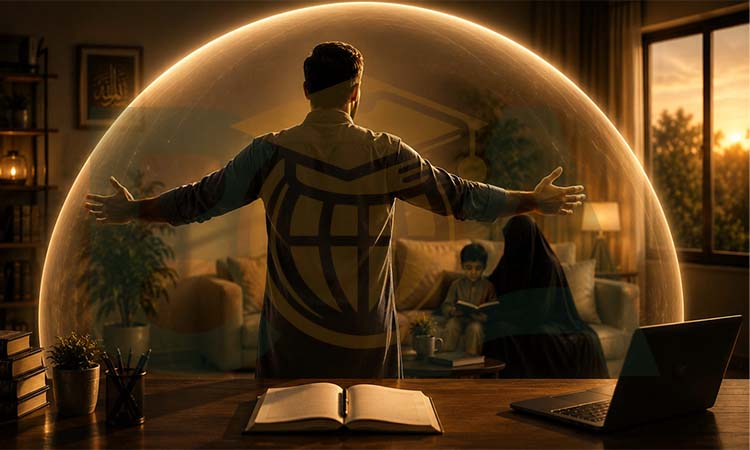
Today, one of the greatest dangers facing future generations is not poverty, unemployment, or technology itself. The greater danger is the absence of proper upbringing—an upbringing that develops in a child’s heart love for Allah Almighty, the Holy Prophet Muhammad ﷺ, the Noble Qur’an, and Islam.
Our Children Are a Trust
Allah Almighty says in the Holy Qur’an:
﴾يٰۤاَیُّهَا الَّذِیْنَ اٰمَنُوْا قُوْۤا اَنْفُسَكُمْ وَاَهْلِیْكُمْ نَارًا وَّقُوْدُهَا النَّاسُ وَالْحِجَارَةُ﴿
Translation:
“O believers! Save yourselves and your families from a Fire whose fuel is people and stones.”
(Surah At-Tahrim, Verse 6)
This verse reminds us that parents are not responsible only for providing food, clothing, shelter, and worldly education. They also carry a responsibility for the protection and development of their children’s faith, beliefs, character, and moral values.
Children are among the greatest trusts placed in our care.
Parents should therefore reflect on the environment in which their children are growing up. What are they watching? Whom are they listening to? Who are they taking as role models? The answers to these questions can play a major role in shaping their future character.
The Challenge of the Digital Age
Today, many children spend hours in front of mobile screens. They may begin to see social-media celebrities as their heroes and become influenced by entertainment or content that does not contribute positively to their character.
Parents may sometimes give a child a mobile phone simply to keep them occupied, without realizing that unrestricted access can also expose them to influences that shape their thinking and behaviour.
Technology itself is not the enemy. It can be a means of knowledge, education, and goodness. However, it can also become harmful when used without guidance.
The real question is not simply whether parents teach their children how to use technology, but whether they also teach them what to watch, what to avoid, and how to use it responsibly.
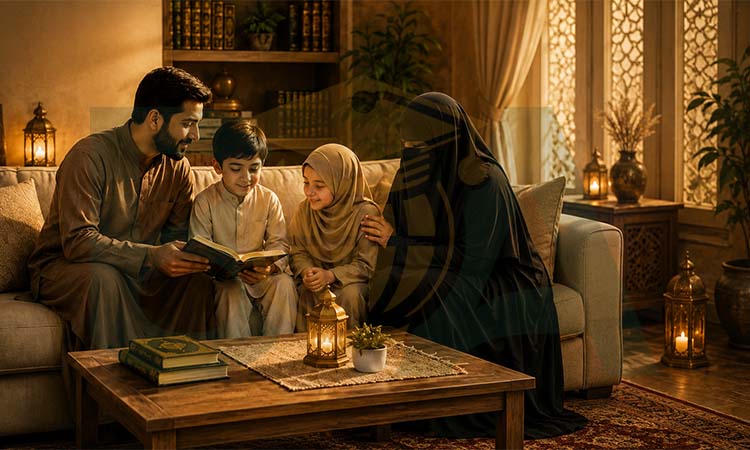
Children need guidance from an early age in prayer, love for the Qur’an, modesty, honesty, good manners, and respect for elders.
Building the Foundation of Faith
Alongside worldly education, children should be given a clear and sound understanding of their faith.
They should be taught about the Oneness of Allah Almighty—that He is One, without partner, and that none is worthy of worship except Him.
They should learn that the Holy Prophet Muhammad ﷺ is the Final Prophet and Messenger of Allah, and that the chain of Prophethood has been completed with him ﷺ.
They should also be taught the honour and lofty status of the noble Companions, the blessed Ahl al-Bayt, and the great personalities who dedicated their lives to preserving and serving Islam.
Faith should not be treated as something reserved only for adulthood. The foundations of belief, love for Allah and His Messenger ﷺ, and attachment to Islamic values should be developed from childhood.
The Educational Legacy of A’la Hazrat
On the occasion of the Urs of Imam Ahl al-Sunnah, Imam Ahmad Raza Khan رحمه الله, it is especially important to remember the significance he placed on the proper upbringing and reform of children.
A’la Hazrat رحمه الله wrote a dedicated treatise, “Mish’alat al-Irshad fi Huquq al-Awlad”, concerning the rights of children and the responsibilities of parents. His teachings emphasize that the upbringing and religious guidance of one’s children should not be taken lightly.
Regarding the reform of children, he explained that a parent’s responsibility corresponds to the importance of the matter being corrected—subject to ability and the expectation that the guidance will be beneficial.
(Fatawa Razawiyyah, Vol. 24, p. 370)
This is a powerful reminder for parents today.
We carefully consider our children’s schools, universities, clothing, careers, and financial future. But do we show the same concern for their faith, beliefs, prayers, character, modesty, and companionship?
Advice Alone Is Not Enough—Parents Must Become Examples
Children often learn more from what they see than from what they are told.
If a father remains occupied with his phone at prayer time while repeatedly telling his child to pray, the child notices the parent’s actions.
If a mother tells her child not to lie but lies herself in everyday matters, the child learns from the example rather than the instruction.
If parents forbid backbiting while regularly speaking negatively about others at home, their words and actions send two different messages.
For this reason, the first step in reforming children is often the reform of the parents themselves.
The Messenger of Allah ﷺ said:
“Command your children to pray when they are seven years old.”
(Sunan Abi Dawud, Hadith 495)
This teaches us that Islamic upbringing should begin early. Children should gradually become familiar with prayer, worship, discipline, and a meaningful connection with their faith.
What Must We Do?
If we genuinely want to protect and prepare future generations, we must begin making conscious decisions today.
1. Create an Environment of Prayer at Home
Children should grow up seeing Salah as a natural and essential part of family life.
2. Connect Them With the Qur’an
The Qur’an should not only be taught for recitation. Children should also develop love, respect, and a desire to live according to its guidance.
3. Guide Their Use of Technology
Children need age-appropriate guidance and boundaries regarding mobile phones and the internet so that technology becomes a source of benefit rather than harm.
4. Pay Attention to Their Companionship
Friends and social circles can strongly influence a child’s behaviour, values, and character.
5. Encourage Questions
Children should not be discouraged from asking questions about Islam. Their questions should be answered with patience, wisdom, and love so that they develop understanding alongside faith.
6. Teach Them the Purpose of Life
Alongside professional skills and worldly education, children should understand why they were created and what truly gives life meaning.
Today’s Decisions Shape Tomorrow’s Generation
Remember: what we give our children today is what they will eventually give back to society.
If we give them love for the Qur’an, we may help raise a generation connected to the Qur’an.
If we establish the importance of Salah in their hearts, we may help raise a generation that values and fills the mosques.
If we teach them modesty, good manners, respect, and the Sunnah, we contribute to the development of a healthier and more upright society.
But if we give them only wealth, unrestricted entertainment, fashion, and the pursuit of worldly success while neglecting their spiritual and moral upbringing, we should not be surprised when future generations become disconnected from the values we failed to pass on.
The Real Danger Is Losing Our Values
The greatest danger facing future generations is not simply that the world is changing.
The greatest danger is that, while the world changes, our future generations may lose their connection with faith, character, modesty, and Islamic values.
On the occasion of the Urs of A’la Hazrat رحمه الله, we should not merely remember his name. We should also seek guidance from his scholarly and religious legacy.
His legacy reminds us of the importance of sound Islamic belief, love for the Messenger of Allah ﷺ, knowledge of religious matters, and steadfastness upon the faith.
It is now our responsibility to ensure that this valuable inheritance is passed on to our children and future generations.
Conclusion
The upbringing of children is not limited to preparing them for a successful career. True success requires preparing them for both this world and the Hereafter.
Let us strive to raise a generation whose hearts are connected with Allah Almighty, whose lives are illuminated by the Qur’an, whose love for the Holy Prophet ﷺ is strong, and whose character reflects Islamic teachings.
May Allah Almighty grant us the ability to provide our children with proper Islamic upbringing, connect them with the Qur’an and the teachings of Islam, and protect their faith, beliefs, and character.
May He also grant us the ability to benefit from the teachings and scholarly legacy of Imam Ahmad Raza Khan رحمه الله, to act upon beneficial knowledge with sincerity, and to pass the treasures of faith to those who come after us.
Āmīn, bi-jāhi al-Nabiyyil Karīm ﷺ.